Case Report | Vol 11 | Issue 3 | September-December 2025 | Page: 17-20 | Soumya Itagi, Rajavardhan Rangappa, Narayana Swamy Moola, Harshavardhan Rangappa Kuri
DOI: https://doi.org/10.13107/jaccr.2025.v11.i03.292
Open Access License: CC BY-NC 4.0
Copyright Statement: Copyright © 2025; The Author(s).
Submitted: 11/10/2025; Reviewed: 23/10/2025; Accepted: 19/11/2025; Published: 10/12/2025
Author: Soumya Itagi [1], Rajavardhan Rangappa [1], Narayana Swamy Moola [1], Harshavardhan Rangappa Kuri [1]
[1] Department of Critical Care Medicine, Manipal hospital Sarjapur, Bangalore, India.
Address of Correspondence
Dr. Soumya Itagi
Department of Critical Care Medicine, Manipal hospital Sarjapur, Bangalore, India.
E-mail: soumyaitagi11@gmail.com
Abstract
Glufosinate ammonium (GLA), a non-selective herbicide, is considered to have low mammalian toxicity. However, ingestion can lead to severe neurological and cardiovascular effects, primarily due to hyperammonemia and myocardial depression. A 25 year old male presented with altered sensorium and cardiovascular compromise following ingestion of unknown quantities of Basta® (GLA-containing herbicide). He developed bradycardia, hypotension, and severe LV dysfunction. Subsequently, patient developed sudden unresponsiveness and was found to have hyperammonemia. Management included hemodialysis for hyperammonemia and intravenous lipid emulsion (ILE) therapy for cardiotoxicity. Clinical improvement was observed with normalization of Glasgow coma scale and cardiac function. Hemodialysis and ILE therapy led to rapid clinical recovery. The patient was extubated on day two and discharged to ward while he remained clinically stable. GLA toxicity can result in life-threatening complications. Multimodal detoxification, including hemodialysis and ILE, may improve outcomes.
Keywords: Glufosinate ammonium, Herbicide poisoning, Hyperammonemia, Intralipid therapy, Cardiotoxicity
Introduction
Poisoning from agricultural chemicals is a major health hazard especially in developing countries like India. Among these agricultural chemicals, herbicides like paraquat and glyphoshate are the most commonly ingested poisons with high morbidity and mortality. Due to easy availability, lack of proper storage techniques and lack of awareness of the hazards of these agricultural chemicals, poisoning from these chemicals are commonly observed [1]. Management of poisoning of these highly toxic compounds requires a profound knowledge of proper management procedures.
Glufosinate ammonium (GLA) is a glyphosate herbicide which is marketed as “Basta®”. This is a non-selective herbicide often labeled as having low human toxicity [2]. However, reports have documented delayed-onset neurotoxicity, cardiotoxicity, and fatal hyperammonemia. There are no structured guidelines nor a specific antidote for glyphosate herbicide poisoning in India and treatment is mainly supportive [3,4]. In this case report, we present a rare case of severe GLA poisoning with both neurological and cardiac manifestations which was successfully managed with hemodialysis and intralipid therapy.
Case presentation
A 25 year old male with no pre-existing co-morbidities presented to a local hospital following ingestion of Basta® (herbicide containing glufosinate ammonium and phosphinothricin) on June 9, 2025. Initially, he underwent gastric lavage followed by administration of activated charcoal. He was clinically stable and was admitted in the Intensive Care Unit (ICU) for monitoring. However, on the following day, he developed sudden unresponsiveness, bradycardia (heart rate of 38/min), hypotension and ST depression on Electrocardiogram (ECG). Mechanical ventilation was initiated via an endotracheal tube and after initial stabilisation he was transferred to our hospital (tertiary care center) for further management.
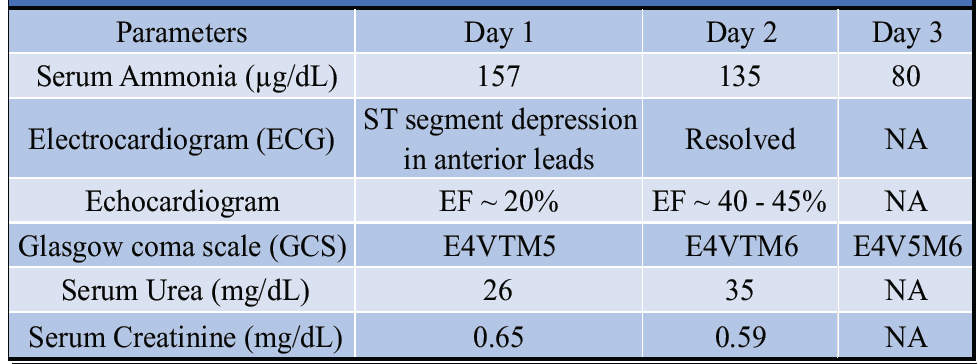
On arrival at the emergency room in our hospital, he had a Glasgow Coma Scale (GCS) of E4VTM5 and continued to be on controlled mode of mechanical ventilation. Computed Tomography (CT) was done in view of low GCS which showed no significant abnormality and he was subsequently shifted to the ICU for further management. He had persistent hypotension with noradrenaline infusion which was on going from the referral centre at 0.26 mics/kg/min. Bedside echocardiography revealed severe left ventricular dysfunction with an ejection fraction of approximately 20%, and he was initiated on dobutamine infusion at 5mics/kg/min. An arterial line was placed in the right radial artery. Arterial Blood Gas analysis (ABG) showed raised serum lactate (5 mmol/L). Laboratory investigations revealed elevated serum ammonia of 157 µg/dL along with deranged liver function test. He had an oliguric acute kidney injury (AKI) with 15 to 20ml/hour of urine output. A diagnosis of severe glufosinate poisoning causing cardiac toxicity while affecting multiple other organs in the form of AKI, deranged liver function tests and elevated lactate levels was made.
In order to correct hyperammonemia, hemoperfusion or hemodialysis was planned for the patient. Due to limited access to hemoperfusion and patient’s financial constraints, hemodialysis was planned for hyperammonemia after a detailed discussion with the family. A 16 Fr (French) Dialysis catheter was secured in the right Internal Jugular Vein (IJV) under ultrasound guidance and hemodialysis was initiated for a duration of 4 hours. Intralipid therapy was administered for suspected cardiac toxicity. Intralipid emulsion (ILE) was given as a 1.5 mL/kg intravenous bolus followed by 0.25 mL/kg/min intravenous infusion over 1 hour. By the following day, the patient improved hemodynamically. Echocardiography also showed improved left ventricular function (EF 40–45%), and vasopressors were slowly tapered and discontinued. Urine output improved to 50-70ml/ hour with reducing lactate trend. Ammonia level reduced to 130 μg/dl. Further, his neurological status improved (GCS – E4VTM6) with reactive pupils. Considering improved hemodynamics with good neurological status, a weaning trial from the mechanical ventilation was attempted. As the patient tolerated the weaning trial, he was successfully extubated and was put on oxygen support using nasal prongs transitioning to room air subsequently. The patient was then transferred to the ward in the following days. (Table 1)
Discussion
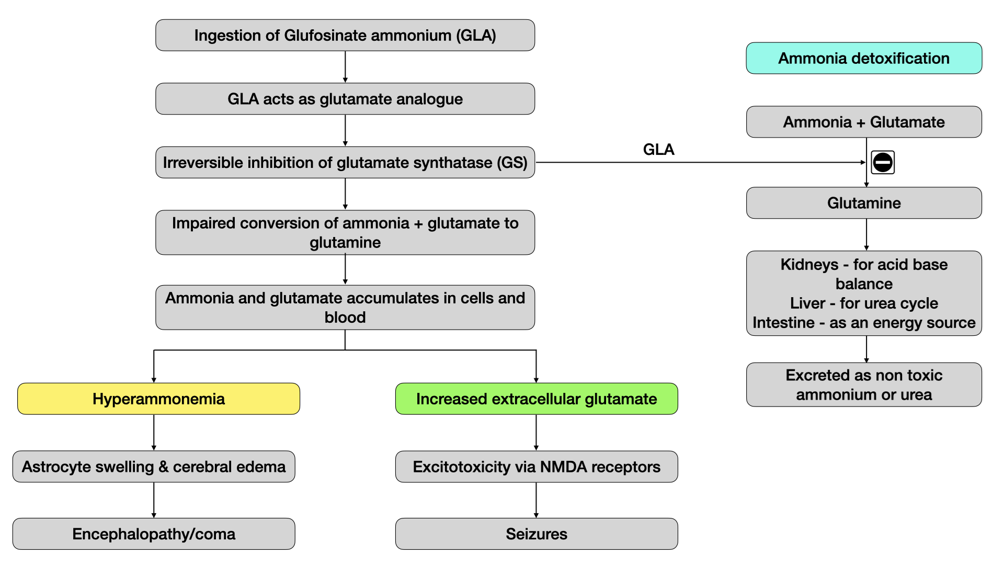
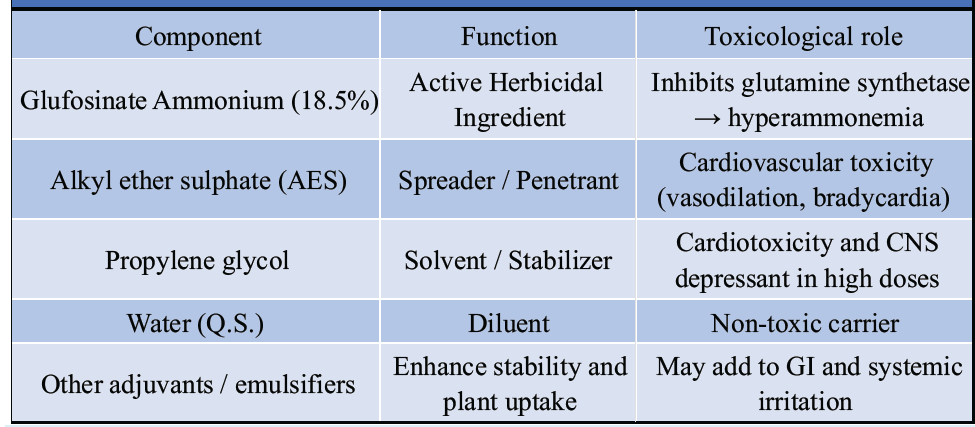
GLA inhibits glutamine synthetase which leads to ammonia accumulation and neurotoxicity. Additionally, surfactants such as Alkyl ether sulphate (AES) which is present in the formulation contribute to cardiovascular collapse [3,4]. This case is notable for early cardiac dysfunction and a positive response to Hemodialysis (HD) along with Intralipid emulsion (ILE). The components which are usually found in Basta® are described in Table 2 and the mechanism of toxicity of GLA is depicted in Figure 1.
Clinical Features and Predictors of Severity
GLA poisoning is associated with a high rate of delayed onset neurological complications which necessitates the need for prolonged observation of the patient after ingestion of the poison. Neurological complications can range from early onset nausea, vomiting, dizziness and delayed onset (12–48 hours) seizures, alterations in levels of consciousness, respiratory failure, hemodynamic instability. Long term neurological effects of GLA poisoning include amnesia and psychiatric sequelae as hippocampal injury may present after initial recovery. Persistent neurological and psychiatric sequelae necessitate long term follow-up [3].
Key predictors of severity of clinical symptoms include i) Serum ammonia levels – levels > 86 µg/dL; ii) Ingested dose ≥ 13.9 grams of GLA; iii) Age ≥ 61 years and iv) Ethanol co-ingestion. Serum hyperammonemia on admission is strongly predictive of neurological complications (e.g., GCS < 8, seizures, amnesia). High ingested dose of GLA is associated with significantly increased risk of severe toxicity and older patients demonstrate worse outcomes, likely due to reduced metabolic and physiological reserve. Interestingly, concurrent ethanol intake was associated with reduced severity in some studies, potentially due to altered absorption or metabolism [5,6].
Management
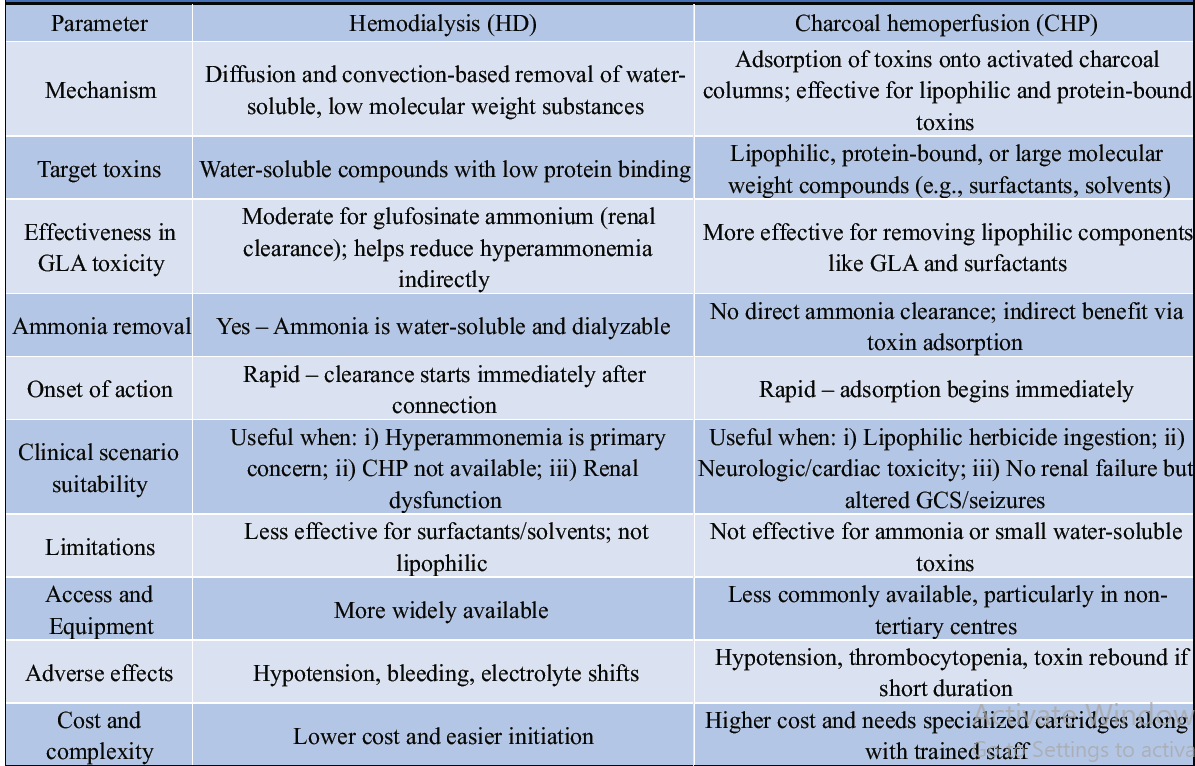
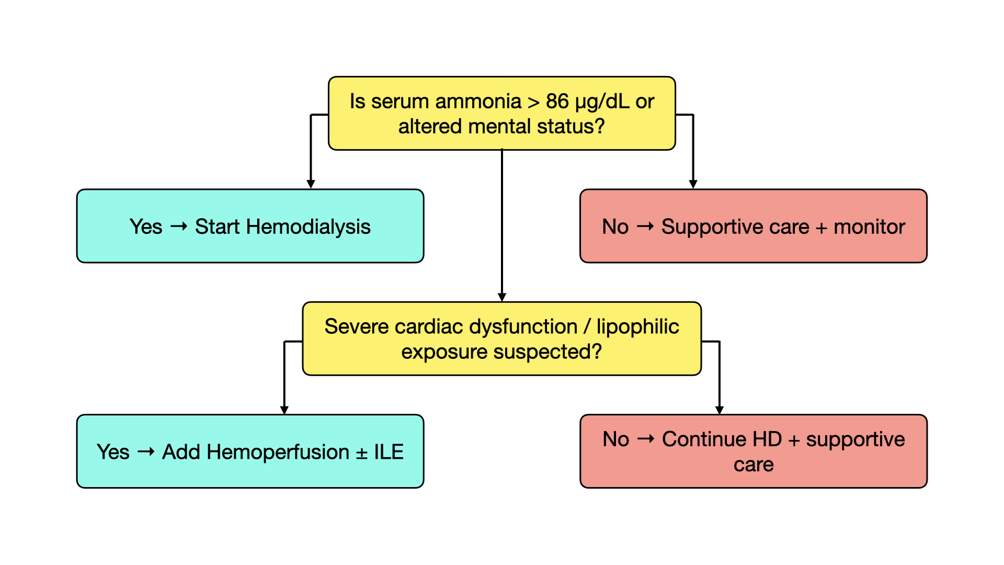
Supportive therapy remains the cornerstone of management and includes gastrointestinal decontamination with activated charcoal if presentation is early (<1 hour), airway protection and mechanical ventilation as needed for a low Glasgow coma scale (GCS < 8). Fluid resuscitation is essential for hemodynamic support. Vasopressors may be used if needed for stabilising the hemodyamics early. Ammonia lowering agents like lactulose may be considered to reduce the gut absorption and seizures prophylaxis may also be considered. Specific management involves hemoperfusion, which is a preferred modality for effectively countering GLA and surfactant induced toxicity. However, in limited resource settings or unavailability of hemoperfusion, hemodialysis may be an effective alternate in mitigating the effects of the compound especially in the presence of co-existing renal failure [7-9]. Table 3 provides the differences between management of GLA toxicity with hemodialysis and hemoperfusion. Figure 2 shows when hemodialysis and/or hemoperfusion can be initiated in patients with GLA toxicity.
Role Of Intralipid Therapy In GLA Poisoning
Intralipid emulsion (ILE) acts like a lipid sink which creates a lipid phase in the blood, sequestering lipophilic toxins and reducing their tissue distribution. Intralipid also supplies fatty acids especially for cardiac ATP production and thus has a great potential for reversing cardiac toxicity. It also has a direct inotropic effect and may directly support myocardial function [10]. Intralipid may be used in GLA poisoning as well even when it is known that GLA is not highly lipophilic. The surfactants (AES) and solvents (propylene glycol) in Basta® are sequestered by the intralipid and thus may help to reduce CNS and cardiac effects caused by these co-formulants. Intralipid may be started in the presence of i) persistent hypotension or low ejection fraction unresponsive to vasopressors, ii) CNS depression or seizures not resolving with standard care and iii) signs of surfactant-related toxicity. Intralipid is usually administered as a bolus of 1.5 mL/kg of 20% ILE followed by an infusion of 0.25 mL/kg/min for 30 – 60 minutes. The maximum permissible intravenous dose of ILE is 10 mL/kg/day. It must be noted that ILE is not a substitute for dialysis or hemoperfusion and is to be used only as an adjunctive therapy in critically ill patients [10].
For follow up, patient and his family were contacted over telephone. Patient was clinically stable and also had rejoined his work. However, he complained of some cognitive impairment in the form of recent memory affection. Patient was advised to follow up with neurologist and psychologist for counselling.
Conclusion
Glufosinate ammonium poisoning is an under-recognised but serious toxicological emergency. It can manifest with delayed neurotoxicity, cardiovascular collapse, and hyperammonemia. Hyperammonemia is a critical prognostic marker and therapeutic target. This case report demonstrated that hemodialysis and intralipid therapy offer a synergistic approach for managing both hyperammonemia and surfactant-related cardiac effects. Early ICU-level supportive care can prevent mortality and multimodal detoxification, even when applied late, can reverse life-threatening symptoms.
Clinical message
This case report discusses the successful management of Glufosinate ammonium poisoning which is an under-recognised but serious toxicological emergency. Early ICU-level supportive care can prevent mortality and multimodal detoxification, even when applied late, can reverse life-threatening symptoms.
List of abbreviations used
GLA – Glufosinate ammonium
ILE – Intravenous Lipid emulsion
ICU – Intensive Care Unit
ECG – Electrocardiogram
GCS – Glasgow Coma Scale
CT – Computed tomography
ABG – Arterial blood gas
AKI – Acute Kidney Injury
IJV – Internal Jugular Vein
AES – Alkyl ether sulphate
HD – Hemodialysis
CNS – Central Nervous System
GS – Glutamate Synthetase
CHP – Charcoal hemoperfusion
References
1. Cherukuri H, Pramoda K, Rohini D, Thunga G, Vijaynarayana K, Sreedharan N, Varma M, Pandit V. Demographics, clinical characteristics and management of herbicide poisoning in tertiary care hospital. Toxicol Int. 2014 May;21(2):209-13. doi: 10.4103/0971-6580.139813. PMID: 25253933; PMCID: PMC4170565.
2. Shankar D, Murali T, Gopinathan T, Varun S. A rare case of glufosinate ammonium poisoning. J Evid Based Med Healthc 2022; 9(08):1-6.
3. Lee DK, Youk H, Kim H, Kim OH, Go J, Kim TH, Cha K, Lee KH, Hwang SO, Cha YS. Initial Serum Ammonia as a Predictor of Neurologic Complications in Patients with Acute Glufosinate Poisoning. Yonsei Med J. 2016 Jan;57(1):254-9. doi: 10.3349/ymj.2016.57.1.254. PMID: 26632409; PMCID: PMC4696962.
4. Koyama K, Koyama K, Goto K. Cardiovascular effects of a herbicide containing glufosinate and a surfactant: in vitro and in vivo analyses in rats. Toxicol Appl Pharmacol 1997;145:409-14.
5. Mao YC, Wang JD, Hung DZ, Deng JF, Yang CC. Hyperammonemia following glufosinate-containing herbicide poisoning: a potential marker of severe neurotoxicity. Clin Toxicol (Phila). 2011 Jan;49(1):48-52. doi: 10.3109/15563650.2010.539184. PMID: 21288152.
6. Hirose Y, Kobayashi M, Koyama K, Kohda Y, Tanaka T, Honda H, Hori Y, Yoshida K, Kikuchi M. A toxicokinetic analysis in a patient with acute glufosinate poisoning. Hum Exp Toxicol. 1999 May;18(5):305-8. doi: 10.1191/096032799678840110. PMID: 10372751.
7. Tanaka J, Yamashita M, Yamamoto T. A comparative study of direct hemoperfusion and hemodialysis for the removal of glufosinate ammonium. J Toxicol Clin Toxicol. 1995;33(6):691-4. doi: 10.3109/15563659509010630. PMID: 8523494.
8. Li J, Li D, Xu Y, Wang A, Xu C, Yu C. The optimal timing of hemoperfusion component in combined hemodialysis-hemoperfusion treatment for uremic toxins removal. Ren Fail. 2015 Feb;37(1):103-7. doi: 10.3109/0886022X.2014.976131. Epub 2014 Nov 25. PMID: 25421427.
9. Holubek WJ, Hoffman RS, Goldfarb DS, Nelson LS. Use of hemodialysis and hemoperfusion in poisoned patients. Kidney Int. 2008 Nov;74(10):1327-34. doi: 10.1038/ki.2008.462. Epub 2008 Sep 17. PMID: 18800032.
10. Gil HW, Park JS, Park SH, Hong SY. Effect of intravenous lipid emulsion in patients with acute glyphosate intoxication. Clin Toxicol (Phila). 2013 Sep-Oct;51(8):767-71. doi: 10.3109/15563650.2013.821129. Epub 2013 Jul 19. PMID: 23869655.
| How to Cite this Article: Itagi S, Rangappa R, Moola NS, Kuri HR. Severe Glufosinate Ammonium Toxicity and Clinical Recovery With Dual Detoxification: A Case Report. Journal of Anaesthesia and Critical Care Case Reports. September-December 2025; 11(3): 17-20. |
(Article Full Text HTML) (Download PDF)